Introduction
The hosting industry across the Gulf Cooperation Council (GCC) is changing rapidly as businesses demand faster websites, stronger security, better uptime, and infrastructure capable of supporting AI-driven applications. At the centre of this shift is The Future of Ssd Hosting: GCC Trends for 2026, a topic that matters to website owners, online stores, agencies, developers, and growing businesses throughout the region.
SSD hosting has already become an important alternative to traditional hard-disk-based hosting because solid-state drives can deliver faster data access and improved server responsiveness. In 2026, however, the conversation is moving beyond simply replacing HDDs with SSDs. Businesses are looking at NVMe storage, cloud infrastructure, regional data centres, advanced security, scalable resources, and performance optimisation as one connected hosting strategy.
For companies operating in markets such as the UAE, Saudi Arabia, Qatar, Bahrain, Kuwait, and Oman, choosing the right hosting infrastructure can directly influence website performance and customer experience. Understanding The Future of Ssd Hosting: GCC Trends for 2026 therefore helps businesses make better technology decisions before upgrading or launching new digital services.
Why SSD Hosting Matters in the GCC
GCC markets have some of the most digitally active consumers and businesses in the region. E-commerce platforms, financial services, real estate companies, tourism businesses, SaaS providers, and professional services increasingly depend on websites and web applications being available and responsive.
Traditional HDD storage relies on mechanical components that physically move to read and write data. SSDs use flash memory instead, allowing servers to access stored information much more quickly. This difference can improve the responsiveness of websites, databases, applications, and content management systems.
The significance of The Future of Ssd Hosting: GCC Trends for 2026 comes from the fact that performance expectations are increasing. Visitors are less tolerant of slow-loading pages, while businesses are processing larger databases, higher-resolution media, customer transactions, and increasingly sophisticated applications.

SSD hosting provides a foundation for meeting those demands, but the next stage will depend on how storage works alongside CPUs, RAM, network connectivity, caching, security systems, and cloud platforms.
The Shift From SSD to NVMe Hosting
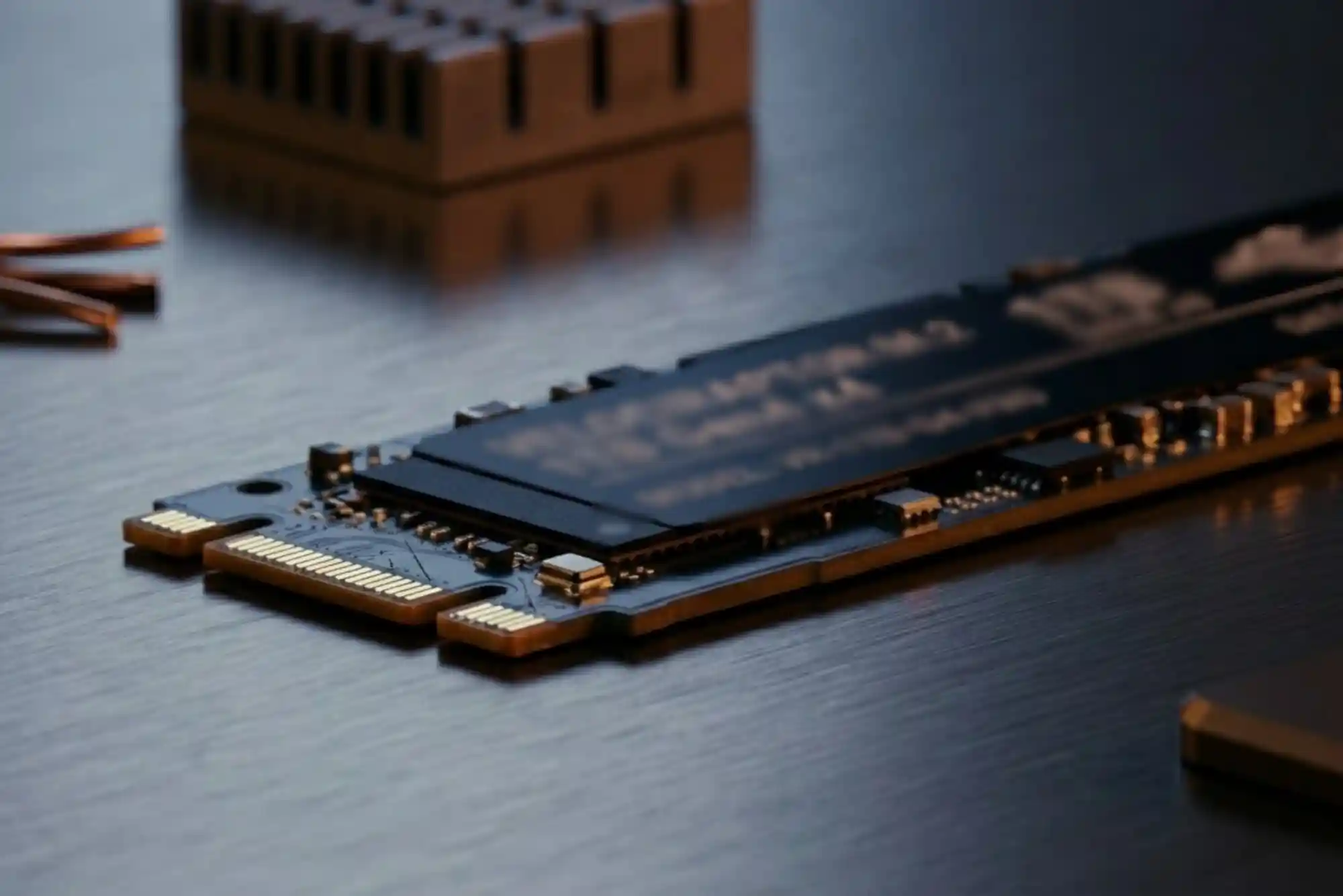
One of the strongest developments influencing The Future of Ssd Hosting: GCC Trends for 2026 is the increasing adoption of NVMe storage.
NVMe is designed specifically for high-speed solid-state storage and communicates with modern systems through PCIe. Compared with older SATA-based SSD technology, NVMe can provide substantially higher throughput and lower latency under suitable workloads.
Why NVMe Is Important
For a basic business website, the difference may not always be dramatic. However, demanding applications can benefit considerably from faster storage. Large databases, e-commerce platforms, development environments, analytics systems, and websites with high concurrent activity can place significant pressure on storage performance.
GCC businesses investing in hosting in 2026 should therefore consider more than whether a provider advertises “SSD hosting.” It is worth checking whether the infrastructure uses modern NVMe drives, what server resources are allocated, and whether storage performance is shared or dedicated.
Storage Will Become Part of a Larger Performance Strategy
Fast storage alone cannot make a poorly configured website fast. Database optimisation, caching, content delivery networks, efficient code, adequate RAM, and strong network connectivity all contribute to performance.
That is why The Future of Ssd Hosting: GCC Trends for 2026 is increasingly about integrated infrastructure rather than one hardware specification.
GCC Data Centres and Regional Hosting Demand
Data location is becoming increasingly important for businesses operating in the Gulf. Organisations may prefer infrastructure located closer to their customers because geographical proximity can reduce network latency and improve the overall experience.
The growth of cloud services and regional data-centre infrastructure is helping businesses access more hosting options within or closer to GCC markets.
Why Location Matters
Consider a UAE-based online store whose customers are primarily located in the UAE and neighbouring countries. Hosting infrastructure positioned appropriately for that audience can help reduce unnecessary network distance.
This does not mean that a local server is automatically faster in every situation. Network architecture, peering, bandwidth, application design, and provider quality all matter. Nevertheless, regional infrastructure is becoming an increasingly relevant factor when evaluating The Future of Ssd Hosting: GCC Trends for 2026.
Businesses handling sensitive information should also evaluate applicable data-protection requirements and their hosting provider’s security and compliance practices before selecting a server location.
SSD Hosting and the Growth of AI Workloads
Artificial intelligence is another major factor shaping The Future of Ssd Hosting: GCC Trends for 2026. Businesses are experimenting with AI chatbots, recommendation systems, document processing, analytics, automation, and intelligent search.
AI workloads can generate substantial amounts of data. Even when the actual model processing takes place on specialised GPUs or external AI platforms, applications may still need to store datasets, logs, embeddings, user information, and application results.
Fast Storage for Data-Intensive Applications
SSD and NVMe storage can help reduce storage-related bottlenecks when applications frequently read and write data. This becomes particularly useful for databases, analytics platforms, development environments, and applications that handle large volumes of information.
However, businesses should avoid assuming that ordinary SSD hosting is sufficient for every AI project. Advanced AI applications may require specialised GPU infrastructure, large amounts of RAM, high-performance networking, and carefully designed storage systems.
Security Will Become a Bigger Part of Hosting Decisions
Speed is only one part of modern hosting. Cybersecurity is becoming equally important as GCC businesses continue moving services online.
In The Future of Ssd Hosting: GCC Trends for 2026, hosting providers are expected to place greater emphasis on firewalls, malware protection, DDoS mitigation, secure authentication, automated backups, monitoring, and infrastructure hardening.
Backups Remain Essential
Fast storage does not protect a website from accidental deletion, ransomware, application vulnerabilities, or administrator mistakes. A reliable backup strategy remains essential.
Businesses should understand how frequently backups are created, how long they are retained, whether they are stored separately from production systems, and how restoration works.
A hosting plan can advertise impressive SSD speeds but still be unsuitable for a business if recovering from a serious incident is difficult.
Better Hosting for E-Commerce Growth
E-commerce is one area where The Future of Ssd Hosting: GCC Trends for 2026 is particularly relevant. Online stores need to manage product catalogues, images, customer accounts, orders, payment integrations, inventory, and sometimes large traffic spikes.
SSD-based infrastructure can improve the responsiveness of database-driven shopping websites, particularly when combined with caching and adequate server resources.
Performance Can Influence Customer Experience
When customers browse products or move through checkout, delays can create frustration. A faster hosting environment can help support a smoother experience, although website code, third-party scripts, images, and network conditions remain important factors.
For GCC retailers preparing for seasonal campaigns or major promotional events, scalable infrastructure can be just as important as fast storage.
Managed Hosting Will Become More Attractive
Not every business has an in-house server administrator. As hosting infrastructure becomes more sophisticated, managed hosting is likely to become increasingly attractive to small and medium-sized GCC businesses.
Managed services can potentially cover server updates, security monitoring, backups, performance configuration, and technical support, depending on the provider and plan.
For businesses that want to focus on sales, customers, and operations rather than server administration, the additional cost can sometimes be justified.
When comparing providers, businesses can explore options such as Hostinger and review regional offerings such as aeServer UAE hosting plans.
Cloud Scalability Will Shape SSD Hosting
Cloud computing is another major influence on The Future of Ssd Hosting: GCC Trends for 2026. Instead of relying exclusively on a single physical server, cloud environments can provide flexible resources that can be adjusted according to demand.
This is useful for businesses whose traffic changes significantly throughout the year.
Scaling Beyond Storage
Modern hosting decisions increasingly involve the complete infrastructure stack. Businesses need to consider CPU capacity, RAM, storage performance, bandwidth, redundancy, backups, load balancing, and monitoring.
SSD storage is therefore becoming one component of a broader performance architecture.
Green Hosting and Energy Efficiency
Sustainability is also becoming more relevant to technology decisions. Data centres consume significant amounts of electricity, so infrastructure efficiency matters to providers and customers alike.
Modern solid-state storage can offer advantages over mechanical drives in areas such as power consumption and physical durability. However, the environmental impact of hosting depends on the entire data-centre operation, including cooling systems, electricity sources, server utilisation, and hardware lifecycle management.
Businesses interested in sustainable hosting should therefore look beyond the “SSD” label and investigate the provider’s wider infrastructure practices.
How Businesses Should Choose SSD Hosting in 2026
Selecting hosting based solely on storage type is no longer enough. Businesses should evaluate the complete service.
First, consider the expected traffic and application workload. A small portfolio website has very different requirements from a busy online store or SaaS application.
Next, investigate whether the provider uses SSD or NVMe storage and whether resources are shared, reserved, or dedicated. Uptime commitments, support availability, backup policies, security measures, server locations, scalability, and pricing should also be considered.
Businesses targeting GCC customers should pay particular attention to server location and network performance. Testing website response times from the target market can provide more useful information than relying entirely on advertised specifications.
Finally, consider future growth. A hosting plan that works today may become restrictive if traffic, database size, or application complexity increases.
The Future of Ssd Hosting: GCC Trends for 2026
Looking ahead, The Future of Ssd Hosting: GCC Trends for 2026 will be shaped by several connected developments: faster NVMe storage, regional data-centre expansion, cloud scalability, AI-driven applications, stronger cybersecurity, and increasing expectations for website performance.
The most successful hosting providers will not compete on storage speed alone. They will combine fast infrastructure with reliable networking, security, backups, scalable resources, technical support, and strong regional connectivity.
For GCC businesses, this creates an opportunity to build websites and applications on infrastructure designed for long-term digital growth rather than choosing a hosting package based only on the lowest monthly price.
Preparing for the Next Generation of Hosting
The Future of Ssd Hosting: GCC Trends for 2026 points toward a hosting environment where performance, scalability, security, and regional infrastructure work together. SSD storage will remain important, but NVMe technology, cloud platforms, AI workloads, modern data centres, and stronger security will increasingly determine what businesses expect from their hosting providers.
Discover Dubai with fresh ideas, local insights, and useful guides designed to help you experience the city at its best. From exciting attractions and lifestyle trends to dining and entertainment, VibeDubai brings helpful information together in one place. Explore more Dubai inspiration, discover new experiences, and plan your next adventure with confidence.
FAQs
What is SSD hosting?
SSD hosting is web hosting that stores website and server data on solid-state drives instead of traditional mechanical hard disk drives. SSDs generally provide faster data access and lower latency.
Is SSD hosting better than HDD hosting?
For many modern websites and applications, SSD hosting can provide better storage performance than HDD hosting. However, overall website speed also depends on CPU, RAM, networking, caching, software optimisation, and server configuration.
Is NVMe better than SSD?
NVMe is a protocol and interface designed for high-performance solid-state storage. NVMe SSDs can provide significantly higher performance than many older SATA SSDs, particularly for demanding workloads.
Does SSD hosting make a website faster?
It can improve server-side storage performance, particularly for database-driven websites and applications. However, SSD hosting is only one part of overall website performance.
Is SSD hosting suitable for e-commerce websites?
Yes. SSD hosting can be suitable for e-commerce because online stores frequently access databases, product information, customer records, and other dynamic content. Larger stores may require dedicated or cloud infrastructure.
What should I look for in SSD hosting in 2026?
Look beyond the storage label. Check whether the provider uses NVMe, the available CPU and RAM, server location, network quality, uptime, backups, security, scalability, technical support, and pricing.
Does server location matter for GCC websites?
Yes. Server location can influence network latency and user experience. Businesses targeting GCC customers should evaluate regional connectivity and test performance from their primary customer markets.
Is SSD hosting expensive?
SSD hosting is available across a wide range of price points. The cost depends on resources, management, storage capacity, performance, support, security, and whether the environment is shared, VPS, dedicated, or cloud-based.
Related Reading: Lake Como Wedding Videographer – Cinematic Wedding Film in Italy
Related Reading: Zero Overheating – Why the Pura 90s Pro Is a Gamer’s Best Friend
Related Reading: هل تستحق حسابات ببجي العشوائية الرخيصة الشراء؟ دليل اللاعب الذكي