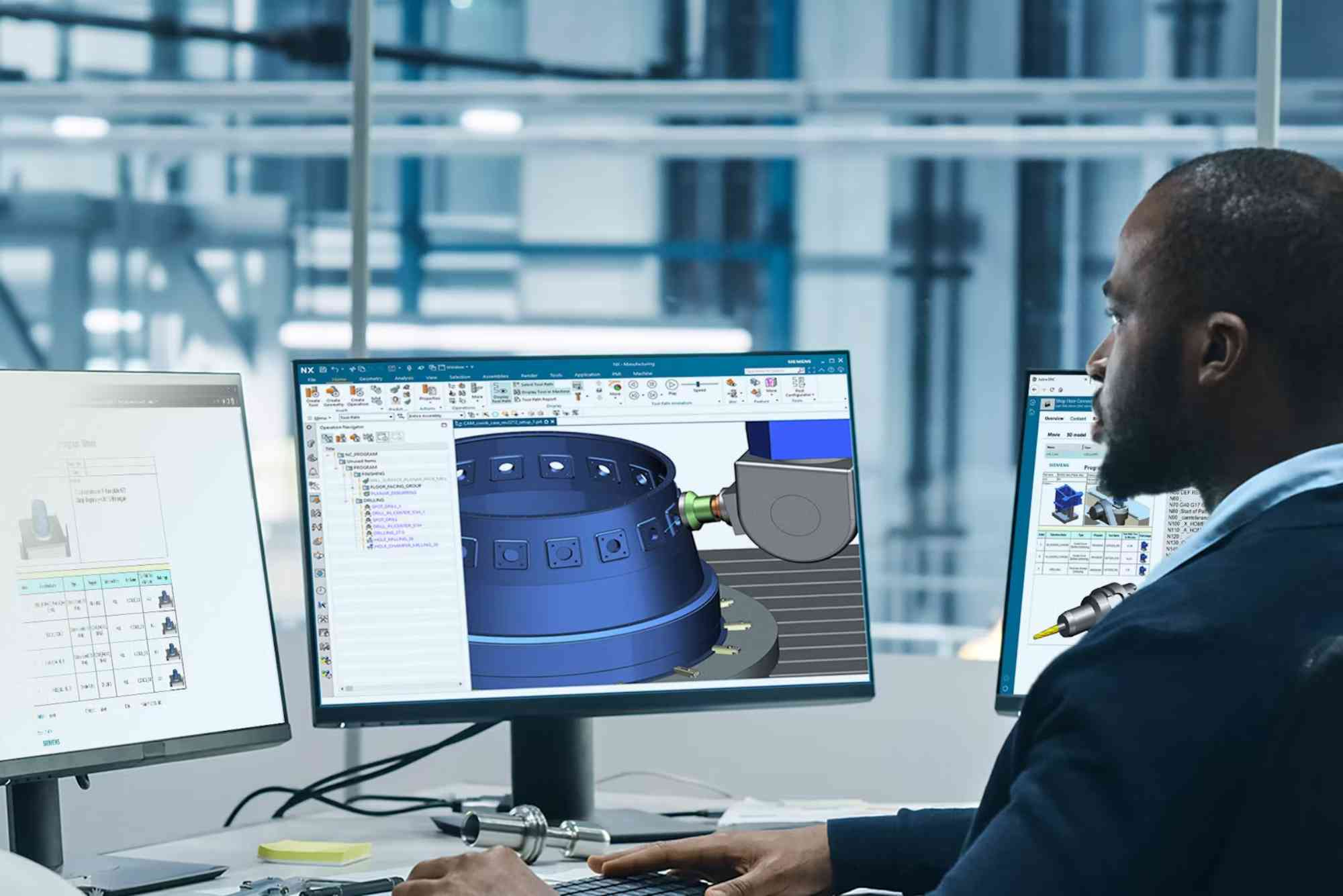
Top Computer Aided Manufacturing Software in 2025
In the evolving world of digital manufacturing, computer aided manufacturing software plays a pivotal role in transforming design concepts into precise, tangible products. As we enter 2025, manufacturers across industries—from automotive to aerospace and medical devices—are relying on advanced CAM solutions to automate machining, reduce waste, and enhance product quality.
Computer aided manufacturing software enables professionals to plan, manage, and control the manufacturing process directly from CAD models. By leveraging these tools, companies can reduce manual errors, optimize tool paths, and speed up production cycles. The latest CAM platforms integrate seamlessly with modern CNC machines, cloud systems, and simulation tools, offering manufacturers an edge in competitive markets.
What Makes a Great CAM Software in 2025?
Modern CAM solutions go beyond generating G-code. They now provide integrated toolpath simulation, adaptive machining, AI-powered optimization, cloud-based collaboration, and real-time feedback from machines. These capabilities not only increase precision but also allow manufacturers to meet tight deadlines and quality standards.
Some key traits that define excellent computer aided manufacturing software in 2025 include:
- Seamless CAD integration: Reduces data translation errors.
- Real-time simulation: Prevents collisions and costly mistakes.
- Multi-axis machining support: Enables complex part production.
- Cloud functionality: Enhances collaboration and remote access.
- Toolpath optimization: Saves materials and machine time.
Leading Computer Aided Manufacturing Software in 2025
Let’s explore some of the top-performing CAM tools in 2025 that are helping manufacturers stay competitive and agile in an era driven by automation and digital transformation.
Fusion 360 with CAM Extension
Fusion 360 continues to be a favorite among both beginners and professionals in 2025. Developed by Autodesk, this all-in-one platform offers robust CAM features integrated into its CAD workspace. The CAM Extension includes 3-axis, 4-axis, and 5-axis milling capabilities, turning, probing, and automatic toolpath generation.

Its cloud-based architecture means users can collaborate across teams, access files from any device, and enjoy regular feature updates. With AI-assisted toolpath suggestions, Fusion 360 helps reduce programming time and machining errors. This software is especially useful for startups and small manufacturers aiming to scale efficiently.
Mastercam 2025
Known for its power and reliability, Mastercam remains a go-to computer aided manufacturing software for complex part machining. In 2025, the platform boasts improved performance for multi-axis milling, turning, and EDM. It supports extensive customization through scripting and automation plugins.
Mastercam’s popularity is backed by a large user community, abundant training resources, and deep integration with CNC hardware providers. The 2025 version includes machine simulation tools, real-time toolpath preview, and dynamic motion technology for optimized cutting strategies.
Siemens NX CAM
Siemens NX CAM is designed for enterprise-level manufacturers that demand scalability and precision. With enhanced AI tools and advanced simulation capabilities, the 2025 version of NX CAM offers predictive maintenance insights and cloud-enabled collaboration. It supports full 5-axis milling, adaptive roughing, and additive manufacturing processes.
What makes NX CAM stand out is its digital twin capability. Manufacturers can model the entire production environment virtually, enabling them to identify issues before they arise on the shop floor. This reduces downtime and improves overall equipment effectiveness (OEE).
SolidCAM 2025
SolidCAM is tightly integrated with SolidWorks, making it a top choice for users of Dassault Systèmes’ design suite. In 2025, SolidCAM has improved its iMachining technology, offering even greater material removal rates while preserving tool life. It also supports simultaneous 5-axis machining, high-speed milling, and probe integration.
The software’s intuitive interface and seamless design-to-production workflow make it accessible to mid-size manufacturers seeking to streamline operations. SolidCAM’s strong support network and continuous updates help users stay ahead of evolving machining challenges.
HyperMILL by Open Mind
For high-end applications like mold & die, aerospace components, and automotive parts, HyperMILL remains a top-tier computer aided manufacturing software in 2025. Its CAM capabilities are known for accuracy, speed, and versatility across complex geometries.
The latest version introduces enhanced AI-driven toolpath calculations, digital thread continuity, and hybrid manufacturing features that combine subtractive and additive processes. HyperMILL’s post-processors are tailored for various CNC systems, ensuring flawless machine execution.
GibbsCAM
GibbsCAM is tailored for high-productivity machining environments. With a focus on ease of use and automation, the 2025 release includes enhanced capabilities for multi-task machining (MTM), Swiss-style turning, and high-speed milling.
Its graphical interface simplifies even complex programming, and the software’s real-time simulation helps reduce setup time and scrap. GibbsCAM integrates well with popular CAD systems and supports multiple file formats, making it flexible for diverse production needs.
HSMWorks
HSMWorks is designed specifically for SolidWorks users, offering native integration and a clean interface. In 2025, it includes adaptive clearing, rest machining, and full 3+2 axis milling. The toolpaths are optimized for fast, efficient cutting while reducing wear on machines.
Ideal for small to medium workshops, HSMWorks offers a cost-effective entry into advanced machining. Its compatibility with Fusion 360 also provides extended functionality and cloud storage options.
Edgecam by Hexagon
Edgecam provides powerful CAM features with a strong focus on mill-turn and production turning. The 2025 edition includes AI-based feature recognition, automatic machining strategies, and cloud-powered tool libraries.
Its hybrid manufacturing capabilities allow for seamless integration between additive and subtractive processes. With Edgecam, users can create intelligent toolpaths quickly, even on complex multi-axis machines.
The Role of Cloud and AI in CAM Software
In 2025, cloud computing and artificial intelligence are reshaping how computer aided manufacturing software is used. AI algorithms analyze past toolpaths, machine data, and material behaviors to suggest optimal settings. This not only reduces programming time but also helps extend tool life and reduce production costs.
Cloud-based CAM platforms allow for collaborative workflows between design, manufacturing, and quality assurance teams. Updates are rolled out faster, and remote troubleshooting becomes easier. Security protocols have also improved, ensuring data integrity and compliance with international standards.
Why CAM Software Matters in Smart Manufacturing
Today’s smart factories depend on efficient and reliable CAM solutions. These tools act as the bridge between design and production, enabling agile responses to design changes, customization demands, and supply chain shifts. Real-time data feedback from CNC machines helps optimize ongoing production and prevent bottlenecks.
By integrating CAM software with enterprise resource planning (ERP) and product lifecycle management (PLM) tools, manufacturers achieve end-to-end visibility of operations. This integrated approach minimizes errors and maximizes return on investment.
How to Choose the Right CAM Software for Your Business
Selecting the ideal computer aided manufacturing software depends on your specific needs. Consider the following:
- Machine compatibility: Ensure your software supports your CNC setup.
- Part complexity: Choose advanced features if you machine intricate parts.
- Industry: Aerospace, automotive, and medical each have unique requirements.
- Budget: Some platforms are subscription-based, while others offer perpetual licenses.
- Support and training: Access to tutorials and community forums can ease the learning curve.
A trial or demo can help assess usability and feature fit. Many vendors offer personalized consultations to guide businesses toward the right choice.
In 2025, computer aided manufacturing software is more powerful, accessible, and essential than ever. From small workshops to global factories, the right CAM solution can dramatically enhance productivity, reduce costs, and improve product quality. Whether you’re a startup seeking to modernize your production or an enterprise optimizing complex machining operations, there’s a CAM tool tailored for your goals.
To get started, evaluate your workflow needs and explore trials of the leading platforms mentioned above. Investing in the right CAM software today could define your success tomorrow.
Frequently Asked Questions
What is computer aided manufacturing software used for?
Computer aided manufacturing software is used to create toolpaths that guide CNC machines to produce parts based on CAD designs. It automates and optimizes the machining process.
Is CAM software different from CAD software?
Yes, CAD software is used for designing products, while CAM software prepares those designs for manufacturing by generating machining instructions.
What is the best CAM software for beginners?
Fusion 360 is highly recommended for beginners due to its intuitive interface, cloud access, and strong community support.
Can CAM software be used with 3D printers?
Yes, many modern CAM platforms, such as Siemens NX and HyperMILL, support additive manufacturing alongside subtractive processes.
Do I need expensive equipment to use CAM software?
Not necessarily. Some CAM software works well with entry-level CNC machines. Cloud-based solutions also reduce the need for high-end hardware.