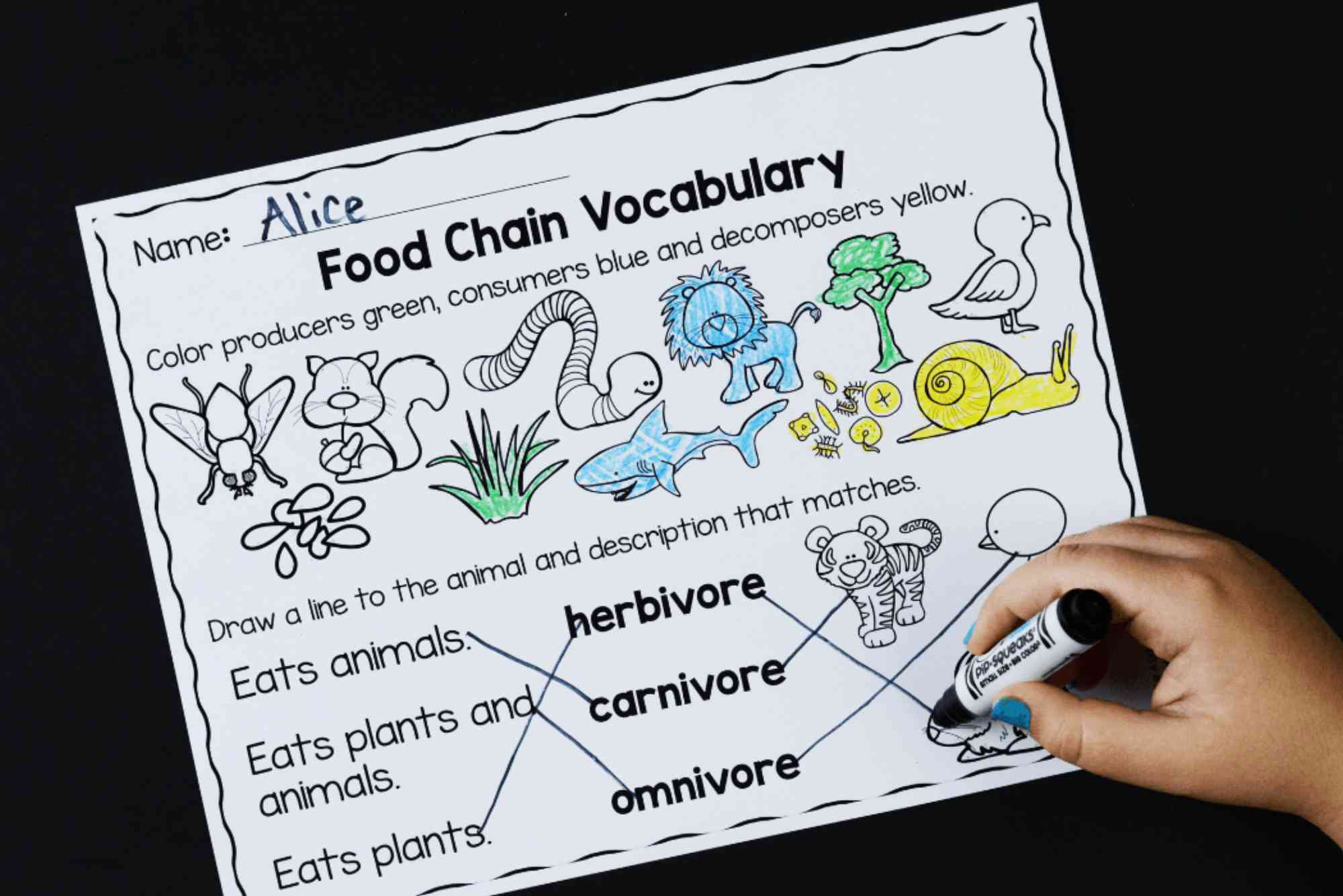
Food Chain Worksheet – Simple Activities for Kids
Understanding how living things are connected in nature is essential for every child. A food chain worksheet can make this concept easy and enjoyable to learn. Whether you’re a teacher, parent, or homeschooling guide, these simple activities will help kids grasp how energy moves through an ecosystem — from the sun to plants to animals.
Let’s dive into engaging ways to teach food chains and bring science to life with creative worksheets tailored for young learners.
Why Teach the Food Chain?
The food chain is a basic ecological concept. It shows how animals and plants rely on each other for energy and survival. Teaching it early helps kids appreciate nature, understand biology, and see how everything in an ecosystem connects.
Using a food chain worksheet makes these lessons interactive. Instead of just hearing or reading about it, children can work with visuals, games, and cut-and-paste activities. That hands-on experience is where real learning happens.
What is a Food Chain?
A food chain is a series of steps showing how energy moves from one living thing to another. It usually begins with the sun, goes to plants, then to herbivores, and ends with carnivores or decomposers.
Key Elements of a Food Chain
Producers
These are usually green plants. They use sunlight to make food. Without them, no other life form could survive.

Consumers
These include herbivores, carnivores, and omnivores. They eat plants or other animals to get energy.
Decomposers
Fungi and bacteria break down dead organisms. They help return nutrients to the soil, completing the cycle.
Creating a Fun Food Chain Worksheet
To make food chain learning stick, your worksheets need to do more than list vocabulary. Kids need to engage, move pieces around, draw, color, and connect dots — literally and figuratively.
Start with Simple Visuals
Use animals kids already know — like lions, deer, rabbits, grass, and birds. A basic worksheet might include:
- Pictures of animals and plants
- Blank arrows to draw connections
- A spot for labeling producers, consumers, and decomposers
Encourage coloring, drawing arrows, or using stickers to make the chain come alive.
Match and Sort Activities
A worksheet can also include cut-out cards for sorting into categories like:
- Producer or Consumer
- Herbivore or Carnivore
- Predator or Prey
This type of activity builds vocabulary and strengthens critical thinking.
Build Your Own Food Chain
Let kids create their own food chain using images or drawings. Ask questions like:
- What does this animal eat?
- What eats this animal?
These open-ended prompts deepen understanding and let creativity flow.
Food Chain Puzzles
Turning food chains into puzzles or sequencing games can boost engagement. A worksheet could have scrambled food chains kids must organize in the right order.
This helps them understand cause and effect and the importance of each link in the chain.
Real-Life Ecosystem Themes
Create themed food chain worksheets based on environments like:
- Forests
- Oceans
- Deserts
- Grasslands
Using real-world examples helps kids see that food chains exist everywhere, and different ecosystems have different players.
Age-Appropriate Worksheet Tips
For Kindergarten to Grade 2
Use bright colors, large pictures, and minimal text. Focus on basic vocabulary and simple chains — like grass → rabbit → fox.
Let them color or cut and paste instead of writing. Repetition helps at this stage, so reinforce the idea of producers and consumers in multiple ways.
For Grades 3 to 5
Introduce more complexity, like decomposers and omnivores. Add short-answer questions or mini-research tasks.
You can include vocabulary boxes, word banks, and simple reading passages paired with comprehension questions.
For Grades 6 and Up
Use worksheets that explore food webs instead of chains. This shows how multiple chains connect in real ecosystems.
Add critical thinking prompts like:
- What happens if one species disappears?
- How do humans impact the food chain?
These higher-level questions connect science to real-life environmental issues.
The Role of Food Webs
While food chains show a single path, real ecosystems are more complex. Food webs combine several chains and show multiple relationships.
Introducing food webs through a worksheet helps older students see the bigger picture. It’s also a great way to transition from simple chains to systems thinking.
Making Worksheets Fun and Effective
Here are some practical strategies to get the most out of your food chain worksheet:
Use Real Photos
Whenever possible, replace cartoons with real animal images. This helps children associate lessons with reality.
Interactive Formats
Laminate cut-and-paste worksheets so they can be reused. Or use dry-erase markers on plastic sheet protectors.
Incorporate Movement
After working on paper, ask kids to act out the food chain. One can be the sun, another a plant, and others animals.
Storytelling
Turn food chains into short stories. For example, “Gary the Grasshopper was hungry. He munched on a leaf…” This format helps memory retention.
Classroom Display
Create a large wall version of a food chain using student work. Let kids add their animals and drawings to build a classroom ecosystem.
Common Challenges Kids Face
Some kids may struggle to understand the direction of energy or confuse the roles of animals. Worksheets with clearly marked arrows, repeated terms, and visual cues can solve this.
Others might not grasp abstract roles like decomposers. In that case, connect it to real-life examples like moldy bread or compost piles.
Making worksheets relatable ensures better learning.
Real-Life Applications
Understanding food chains helps children think critically about nature. They begin to see how pollution, deforestation, or hunting affect animal populations.
A well-designed food chain worksheet doesn’t just teach science — it builds environmental awareness and respect for life.
FAQs
What is a food chain worksheet?
It’s an educational tool that helps kids learn how energy flows through producers, consumers, and decomposers in nature.
Why are food chains important for kids to learn?
They teach how living things are connected, promoting environmental awareness and basic science understanding.
How do you explain the food chain to a child?
Use simple words: “Plants get energy from the sun, animals eat the plants, and bigger animals eat smaller ones.”
What grade is appropriate for food chain worksheets?
They can be adapted for any level from kindergarten to middle school, depending on complexity.
How do I make a fun food chain worksheet?
Add visuals, matching games, cut-and-paste parts, coloring sections, and short creative writing prompts.