Introduction
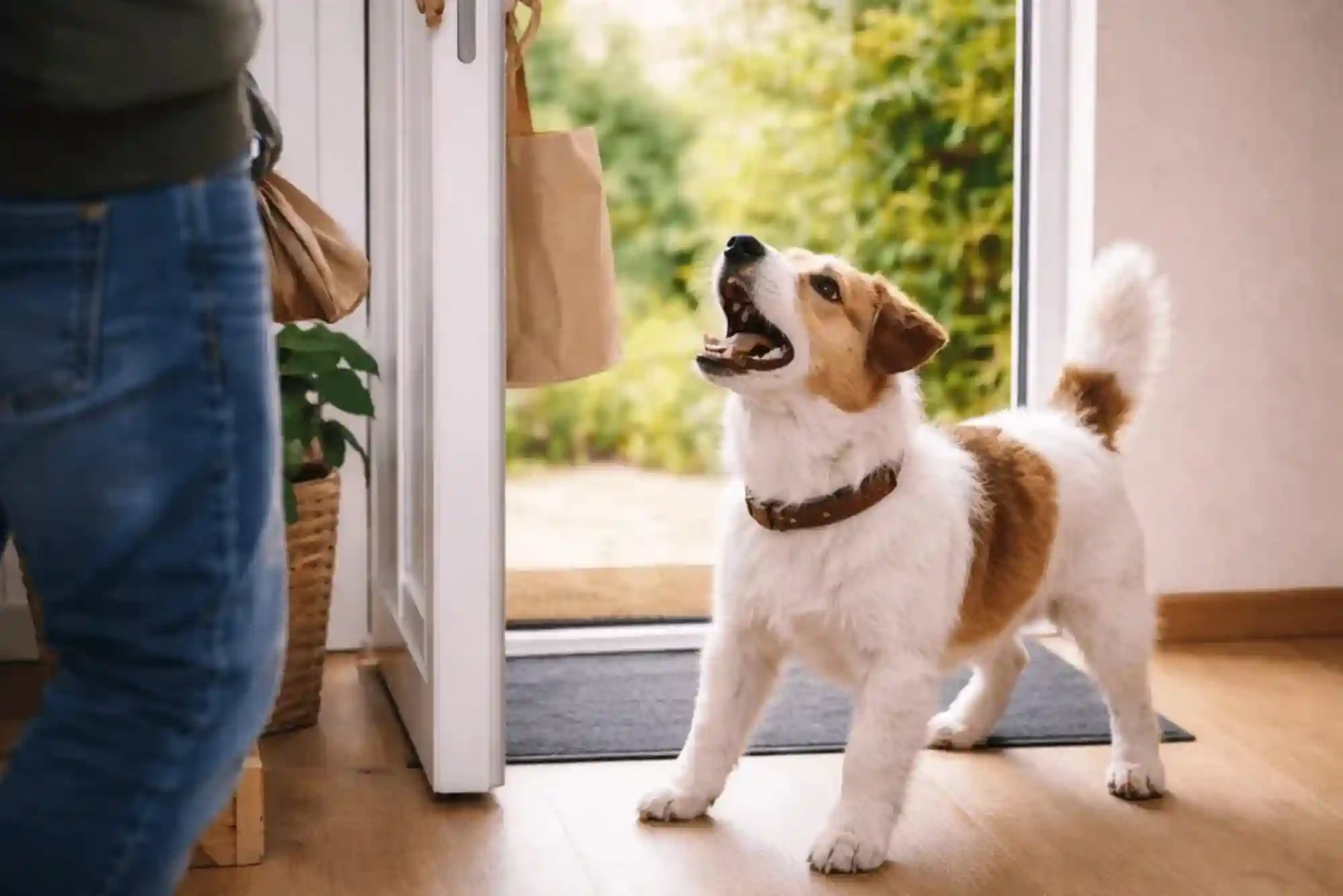
Door barking is a common challenge for dog owners. Your dog may bark when the doorbell rings, visitors arrive, or someone walks past the entrance. Although this behavior can feel frustrating, it often comes from excitement, fear, territorial instincts, or uncertainty.
Learning how to stop a dog from barking at the door begins with understanding why the behavior happens. Instead of punishing your dog, you can teach a calmer response through positive reinforcement and counter-conditioning.
Counter-conditioning changes how your dog feels about a particular trigger. For example, your dog can learn that the doorbell predicts delicious treats rather than a stressful encounter. Over time, this association can reduce excessive barking and make visitors less overwhelming.
This guide explains five practical counter-conditioning steps. With patience, consistency, and suitable rewards, you can help your dog develop calmer habits around the front door.
Why Do Dogs Bark at the Door?
Before exploring how to stop a dog from barking at the door, consider what triggers the behavior. Dogs communicate through barking, and different situations can produce different reactions.
Some dogs bark because they believe strangers threaten their territory. Others become excited when they hear familiar voices or anticipate meeting new people. Sensitive dogs may bark because unexpected noises make them nervous.

In addition, barking can become a learned habit. If a person approaches and eventually walks away, your dog might believe barking successfully made the person leave.
Recognizing these motivations helps you choose the right training approach. A fearful dog may need more distance from visitors, while an excited dog may benefit from practicing calm greetings.
How to Stop a Dog from Barking at the Door: 5 Proven Counter-Conditioning Steps
Step 1: Identify Your Dog’s Triggers
The first step is identifying exactly what makes your dog bark. Observe your dog’s behavior during everyday situations without deliberately creating overwhelming experiences.
Your dog might react to the doorbell, footsteps outside, knocking, unfamiliar voices, or the sight of someone approaching. These triggers can require slightly different training approaches.
Pay attention to your dog’s body language. A relaxed posture, loose movements, and a soft expression usually indicate greater comfort. Stiffness, tucked tails, pinned ears, or attempts to retreat may suggest fear or stress.
Once you understand the trigger, begin training at a manageable intensity. For example, use a quiet recording of the doorbell instead of asking someone to knock loudly.
The goal is to expose your dog to a trigger without causing an intense barking reaction. This makes learning easier and helps prevent unnecessary stress.
Step 2: Create a Positive Association With the Doorbell
Counter-conditioning works by changing your dog’s emotional response to a trigger. Instead of viewing the doorbell as a reason to become alarmed, your dog learns that it predicts something enjoyable.
Start with a quiet doorbell recording played at a low volume. Immediately after the sound, offer a small, high-value treat. Chicken, suitable commercial dog treats, or another favorite reward may work well.
Repeat the process several times during short sessions. Keep the volume low enough that your dog can remain relaxed and eat comfortably.
Gradually increase the volume only when your dog consistently remains comfortable. If barking, tension, or frantic behavior appears, reduce the intensity.
Timing matters during this exercise. The doorbell should predict the reward, rather than the treat being used to lure your dog through an uncomfortable situation.
With repeated practice, your dog may begin looking toward you for a reward after hearing the sound. This is a useful sign that the association is changing.
Step 3: Teach a Calm Alternative Behavior
An important part of learning how to stop a dog from barking at the door is giving your dog something else to do.
Simply telling a dog to stop barking does not explain which behavior you want instead. Teaching a specific alternative creates a clearer expectation.
A comfortable mat or designated resting area can be useful. Begin by rewarding your dog for approaching the mat, standing on it, and eventually settling there.
Practice when nobody is visiting. Use a consistent cue, such as “place,” and reward your dog for remaining relaxed.
Once your dog understands the behavior, introduce a quiet doorbell sound. Reward your dog for moving toward the mat instead of rushing toward the entrance.
Keep early sessions simple. If your dog struggles to remain on the mat, reduce the difficulty and reward smaller successes.
Never force a fearful dog to stay near the door. The resting area should provide comfort and choice, not become a place where your dog feels trapped.
Step 4: Practice With Controlled Visitor Arrivals
After your dog becomes comfortable with the doorbell sound, practice realistic arrivals. Ask a trusted friend or family member to help with short, controlled sessions.
Begin with the visitor standing outside at a distance. Your dog should hear or see the person without becoming excessively distressed.
When the visitor appears, offer treats for calm behavior. If your dog can respond to a familiar cue, reward that response as well.
Gradually introduce additional steps, such as quiet knocking, the door opening slightly, and the visitor entering. Increase only one challenge at a time.
For example, your dog might first practice hearing a knock while remaining on the mat. Later, you can practice opening the door while rewarding calm behavior.
If your dog starts barking intensely, lunging, or refusing treats, the situation may be too difficult. Increase distance, close the door if appropriate, and return to an easier step.
During real arrivals, use a leash, baby gate, or another suitable barrier when needed. This protects visitors while giving your dog space to settle.
Avoid forcing greetings. Your dog does not need to meet every visitor, and maintaining a comfortable distance can support better long-term progress.
Step 5: Reinforce Calm Behavior Consistently
The final step is making calm responses part of your everyday routine. Dogs learn through repeated experiences, so consistency matters more than expecting immediate results.
Reward your dog when the doorbell rings and your dog looks toward you calmly. Offer praise or treats when your dog settles on the mat or watches a visitor without reacting intensely.
Ask everyone in your household to follow the same approach. Mixed responses can confuse your dog and make progress less predictable.
Management also plays an important role. Close curtains if outdoor movement triggers barking, use white noise when appropriate, and prevent repeated access to windows overlooking busy areas.
Avoid shouting, hitting, or using frightening corrections. These methods can increase stress and may make visitors seem even more threatening.
If your dog occasionally barks, remain calm and guide them toward the trained alternative when possible. Reward recovery and relaxation rather than demanding perfect silence immediately.
How Long Does Counter-Conditioning Take?
The time required to improve door barking depends on your dog’s temperament, previous experiences, and the intensity of the trigger.
Some dogs show early improvement after several short sessions. Others need weeks or months of gradual practice, especially when fear or anxiety contributes to their reactions.
Aim for brief, successful sessions instead of long training periods. Five minutes of focused practice may be more productive than repeatedly exposing your dog to stressful situations.
Track small changes, such as recovering faster after a knock, accepting treats near the door, or settling on the mat more consistently.
Progress may not be perfectly linear. An unfamiliar visitor or unexpected noise can trigger barking again. Return to easier exercises and continue reinforcing calm behavior.
Common Mistakes to Avoid When Training a Barking Dog
One common mistake is expecting a dog to remain calm during a full visitor arrival before learning the basic skills. Training should progress gradually, starting with manageable sounds and movements.
Another mistake is repeating the doorbell until the dog becomes overwhelmed. Repeated exposure alone does not guarantee improvement. Counter-conditioning requires pairing the trigger with positive experiences at a comfortable intensity.
Owners sometimes reward their dogs too late. Delivering a treat immediately after the trigger helps create a clearer association.
It is also important to avoid punishing warning signals. Barking, growling, and retreating can communicate discomfort. Suppressing these signals without addressing the underlying emotion may make the situation less safe.
Finally, do not expect every dog to greet visitors happily. A calm dog that remains comfortably behind a barrier can be a successful training outcome.
Frequently Asked Questions
How do I stop my dog from barking at the door?
Identify the trigger, pair it with rewards, and teach an alternative behavior such as settling on a mat. Practice gradually with controlled doorbell sounds and visitor arrivals. Reward calm responses and use barriers when necessary.
Why does my dog bark every time someone knocks?
Your dog may perceive knocking as a territorial warning, an exciting event, or an unpredictable noise. Previous experiences can reinforce this response. Observe your dog’s body language to understand whether fear, excitement, or alerting behavior contributes to the barking.
Should I ignore my dog when it barks at the door?
Ignoring barking may not help when your dog feels frightened or threatened. Instead, manage the situation, reduce the trigger’s intensity, and reward calm alternative behaviors. Avoid shouting because it can increase excitement or stress.
Can you train a dog to stop barking at the doorbell?
Yes, many dogs can learn to respond more calmly through gradual counter-conditioning and positive reinforcement. Start with a quiet doorbell recording, pair the sound with treats, and slowly progress toward realistic visitor arrivals.
How long does it take to stop door barking?
Some dogs improve within several sessions, while others need weeks or months of consistent practice. The timeline depends on the dog’s emotional response, training history, and environment. Severe fear or aggression may require professional guidance.
Conclusion
Learning how to stop a dog from barking at the door requires patience, realistic expectations, and a clear training plan. By identifying triggers, creating positive associations, teaching an alternative behavior, practicing controlled arrivals, and reinforcing calm responses, you can help your dog feel more comfortable around visitors.