Introduction
Puppies are naturally excited when they meet people. They often jump on visitors, family members, and strangers to get attention. Although this behavior may seem adorable initially, it can become difficult as your puppy grows. Therefore, learning how to stop puppy jumping on people is an important part of early training.
Four-on-the-floor training teaches puppies to keep all four paws on the ground when greeting someone. Instead of rewarding jumping, you reward calm behavior. This approach helps your puppy understand which actions bring attention and affection.
The best part is that you do not need harsh corrections or complicated equipment. With patience, consistency, and positive reinforcement, you can encourage polite greetings. Whether your puppy jumps on guests or family members, this method provides a practical foundation for better manners.
What Is Four-on-the-Floor Training?
Four-on-the-floor training is a positive reinforcement technique that rewards puppies for keeping their paws on the ground. Whenever your puppy approaches someone without jumping, you provide attention, praise, or a small treat.
The principle is simple. Puppies repeat behaviors that produce rewarding results. If jumping earns petting or excitement, your puppy may continue doing it. However, if calm greetings receive attention, your puppy gradually learns a better alternative.
This method also helps develop impulse control. Your puppy learns to manage excitement instead of immediately reacting to every person who enters the room.

Consistency matters because puppies learn through repeated experiences. Every family member should follow the same approach to prevent confusion.
Why Do Puppies Jump on People?
Excitement and Social Greetings
Puppies often jump because they are excited to see people. Dogs naturally use body language to communicate, and jumping can become part of their greeting behavior.
Your puppy may jump when you return home, when guests arrive, or when meeting another person during walks. These situations can create intense excitement, making calm behavior more challenging.
Seeking Attention
Attention is another common reason puppies jump. Even pushing your puppy away, talking loudly, or making eye contact can reinforce the behavior.
From your puppy’s perspective, any reaction may feel rewarding. Consequently, jumping can become a repeated habit unless you teach a more appropriate greeting.
Excess Energy and Limited Training
Young puppies have developing self-control. They may struggle to remain calm when something exciting happens.
Insufficient rest, overstimulation, or a lack of training can make jumping more frequent. Therefore, provide suitable exercise, mental enrichment, and regular opportunities to practice calm behavior.
How to Stop Puppy Jumping on People With Four-on-the-Floor Training
Teach Your Puppy That Calm Behavior Earns Rewards
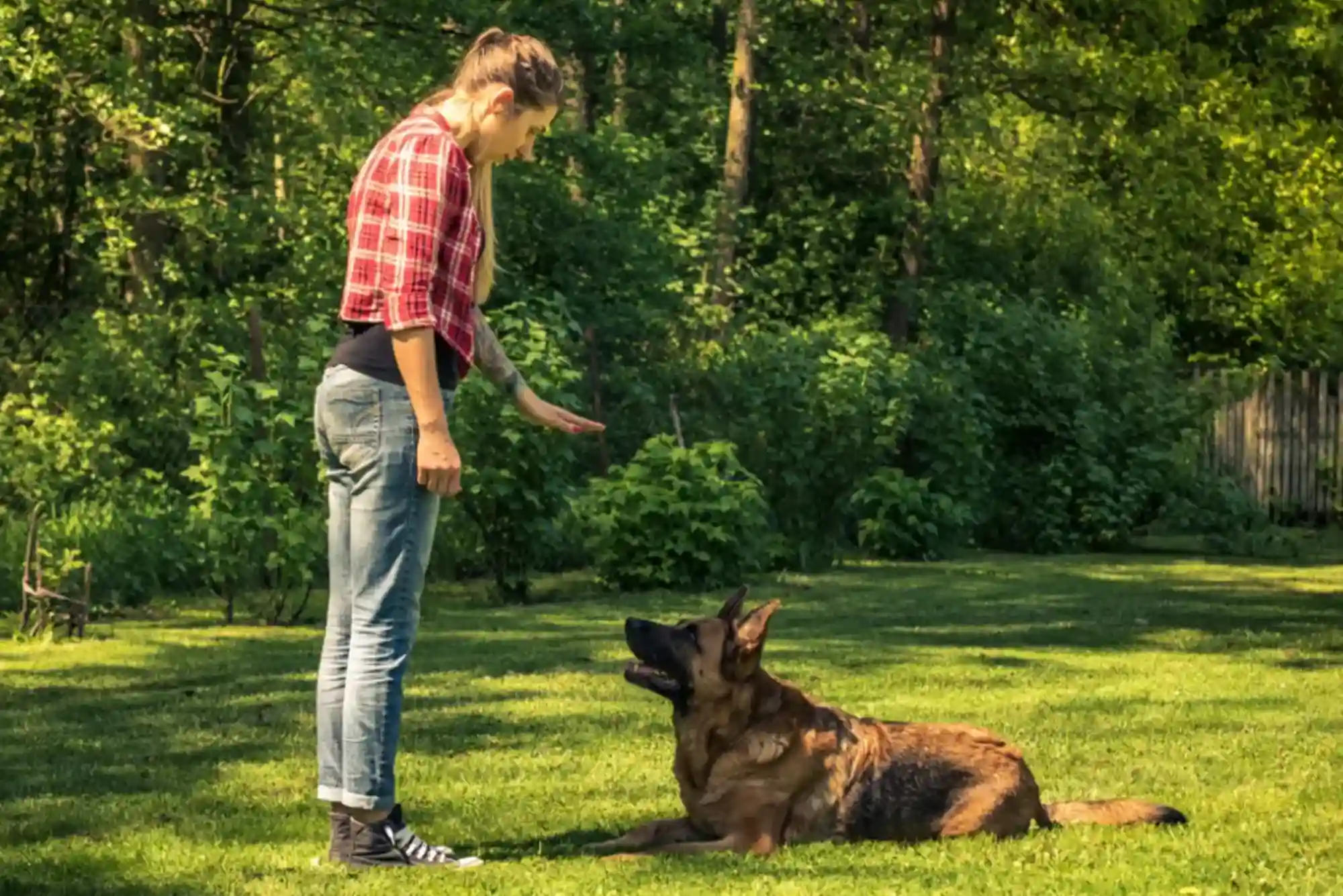
Begin training in a quiet environment with minimal distractions. Stand near your puppy and wait for all four paws to touch the ground.
The moment your puppy stands calmly, offer a small treat and gentle praise. Repeat the exercise several times, allowing short breaks when needed.
If your puppy jumps toward your hands, keep them still and avoid rewarding the behavior. Wait until the paws return to the floor before offering attention.
Initially, reward even brief moments of calm behavior. As your puppy improves, gradually expect longer periods of relaxed standing.
This foundation helps your puppy understand how to earn rewards without jumping.
Stop Giving Attention When Your Puppy Jumps
One of the most important steps is changing your reaction to jumping. When your puppy jumps, calmly turn away or pause the interaction.
Avoid shouting, kneeing your puppy, or pushing them down. These reactions can frighten your puppy or accidentally make the interaction more exciting.
Once all four paws are back on the floor, immediately offer praise or attention. This creates a clear connection between keeping paws down and receiving rewards.
However, timing is essential. If you reward your puppy too late, they may not understand which behavior earned the treat.
Everyone in your household should follow the same rule. Mixed responses can make training slower because jumping sometimes succeeds.
Practice Calm Greetings With Family Members
After your puppy understands the basic exercise, introduce short greeting sessions. Ask a family member to approach slowly while you supervise your puppy.
Reward your puppy for remaining on the floor. If jumping begins, the person should pause or briefly turn away.
When your puppy settles, the person can resume the greeting. Repeat the process until calm approaches become easier.
Keep these sessions short and positive. Several brief practices throughout the day are often more manageable than one long session.
Gradually introduce different people and situations. Your puppy needs practice learning that calm greetings are rewarding everywhere, not only inside the home.
Teach an Alternative Behavior
Some puppies need a specific behavior to perform when people approach. Teaching your puppy to sit can provide a useful alternative to jumping.
Begin by rewarding your puppy for sitting in a quiet room. Once the behavior becomes reliable, practice while someone approaches from a short distance.
Reward your puppy for remaining seated and keeping all four paws on the ground. If your puppy stands or jumps, calmly reset the exercise without punishment.
You can also teach your puppy to go to a mat during greetings. This is especially helpful when visitors enter your home.
Remember that sitting should not become a source of frustration. If your puppy struggles, reduce distractions and return to an easier training stage.
How to Manage Puppy Jumping When Visitors Arrive
Visitors can make training more difficult because your puppy may become overwhelmed by excitement. Prepare before opening the door instead of waiting for jumping to begin.
Use a baby gate, exercise pen, or leash when appropriate to create a manageable distance. Ask visitors to ignore jumping and reward calm behavior with your guidance.
Once your puppy settles, allow a brief greeting. If jumping returns, calmly increase the distance and try again.
Avoid allowing visitors to encourage jumping because they consider it cute. A puppy that learns to jump on some people may struggle to understand why others dislike the same behavior.
If your puppy becomes extremely excited, give them time to settle before another greeting. Short, successful interactions build better habits than overwhelming encounters.
Common Four-on-the-Floor Training Mistakes
Rewarding Jumping Without Realizing It
Petting, talking, and laughing can reward jumping. Even negative attention may encourage a puppy that wants interaction.
Instead, make attention available when your puppy keeps all four paws on the floor. Ensure everyone understands this rule.
Expecting Immediate Results
Puppies need time to develop self-control. Some learn quickly, while others require weeks of consistent practice.
Progress may vary depending on your puppy’s age, temperament, and environment. Celebrate small improvements instead of expecting perfect greetings immediately.
Using Punishment
Shouting or physically correcting a puppy can increase fear and excitement. Punishment also fails to teach the puppy what to do instead.
Positive reinforcement provides a clearer alternative. Reward calm behavior and manage situations where jumping is likely.
Practicing Only at Home
Your puppy may behave well with family members but jump when meeting strangers. This happens because dogs do not automatically apply every learned behavior to new situations.
Practice gradually in different environments. Begin with familiar people before introducing busier settings and unfamiliar visitors.
How Long Does It Take to Stop Puppy Jumping?
The time required depends on your puppy’s age, personality, training history, and consistency. Some puppies show improvement within several days, while others need several weeks of regular practice.
Aim for short training sessions throughout the day. Reward calm greetings whenever opportunities arise, and avoid situations where jumping repeatedly succeeds.
Remember that occasional setbacks are normal. Exciting visitors, tiredness, and unfamiliar environments can make training more challenging.
If jumping persists despite consistent training, consider consulting a qualified reward-based dog trainer. Professional guidance can help identify triggers and develop a suitable training plan.
Frequently Asked Questions
How do I stop my puppy from jumping on people?
Reward your puppy whenever all four paws remain on the floor. When jumping occurs, calmly pause attention and resume interaction once your puppy settles. Consistent practice helps establish polite greetings.
Should I ignore my puppy when they jump?
Briefly withdrawing attention can help when your puppy jumps for social interaction. Turn away calmly and avoid speaking or pushing them. Reward your puppy as soon as their paws return to the ground.
At what age should I stop puppy jumping?
You can begin teaching polite greetings as soon as your puppy comes home. Early training helps prevent jumping from becoming an established habit. Keep sessions gentle, short, and appropriate for your puppy’s developmental stage.
Why does my puppy jump on strangers but not family members?
Strangers may create more excitement because they bring unfamiliar smells, movements, and social experiences. Practice calm greetings with familiar people first, then gradually introduce new people at a comfortable distance.
Does four-on-the-floor training really work?
Yes, four-on-the-floor training can be effective when applied consistently. It rewards the behavior you want instead of giving jumping the attention it seeks. Results depend on timing, repetition, and everyone following the same approach.
Conclusion
Learning how to stop puppy jumping on people begins with understanding why the behavior happens. Puppies often jump because they feel excited or want attention. Four-on-the-floor training gives them a clearer way to earn affection and rewards.