Introduction
Teaching your dog to ring a bell to go outside for potty breaks is a simple way to improve communication. Instead of barking, scratching the door, or having accidents indoors, your dog can use a clear signal. With patience and consistent practice, most dogs can learn this useful behavior.
Understanding how to teach your dog to ring a bell to go outside for potty breaks begins with positive reinforcement. Your dog needs to associate the bell with opening the door and getting an opportunity to relieve themselves. Puppies, adult dogs, and newly adopted pets can all benefit from this method.
The key is to make the process easy and rewarding. You do not need expensive equipment or complicated training techniques. A simple bell, a suitable location, and a consistent routine can help your dog develop this valuable habit.
Why Teach Your Dog to Ring a Bell for Potty Breaks?
Dogs communicate through body language, sounds, and behavior. However, their signals are not always obvious to their owners. A dog might walk toward the door, sniff around, whine, or become restless when they need to go outside.
A potty bell provides a more recognizable signal. Once trained, your dog can ring it whenever they need an outdoor bathroom break.
This method can be especially helpful for puppies learning house training. It also benefits adult dogs adjusting to a new home. Additionally, it may reduce confusion between playtime and bathroom time.

However, bell training does not replace regular potty breaks. Young puppies and some senior dogs still need frequent outdoor opportunities.
How to Teach Your Dog to Ring a Bell to Go Outside for Potty Breaks
Choose the Right Potty Training Bell
Start by selecting a bell that your dog can easily reach. Hanging bells, door-mounted bells, and button-style communication devices are common options.
Choose a sound that is noticeable without being excessively loud. The bell should also be sturdy enough to withstand repeated touching.
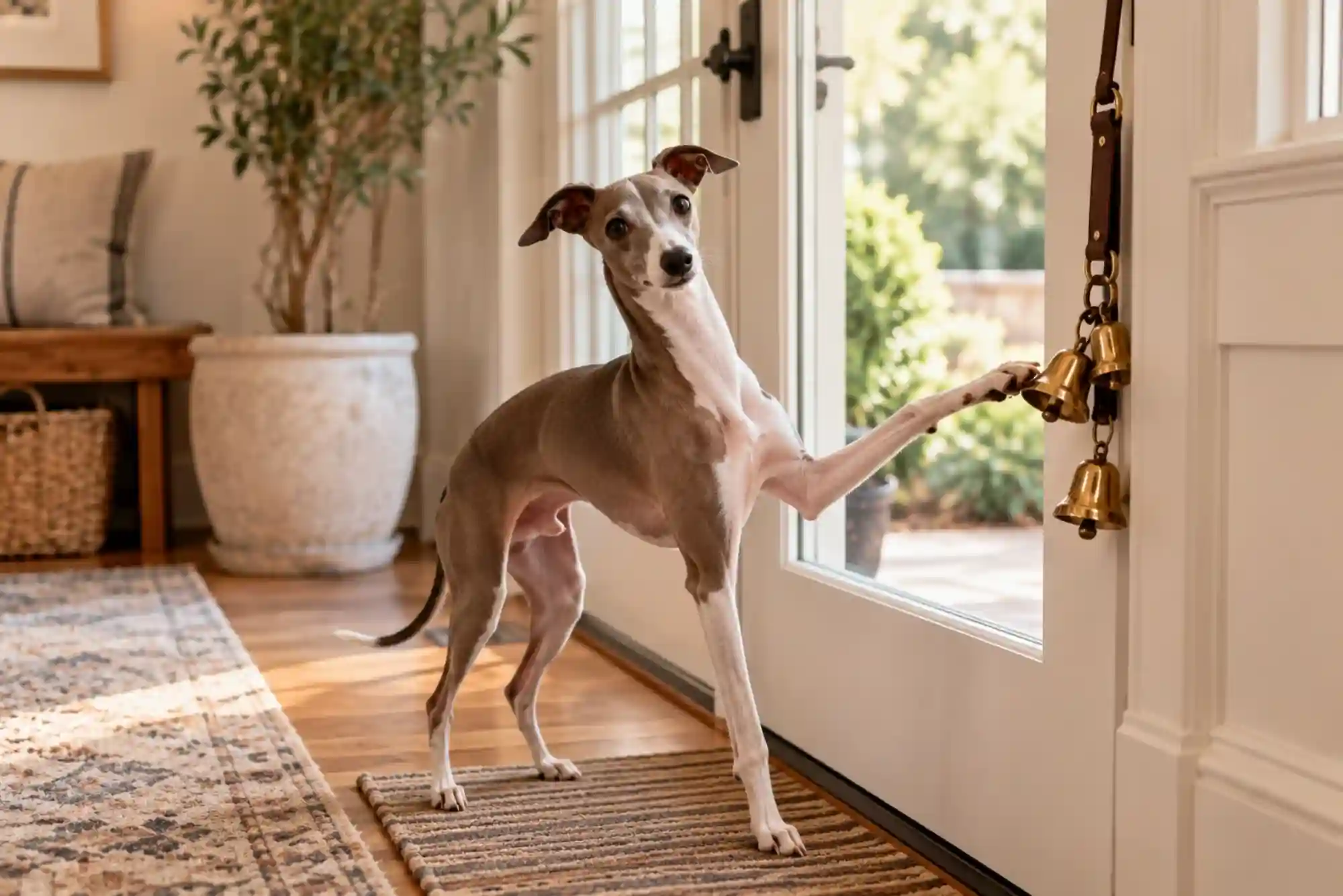
For small dogs, place the bell near their nose level. Larger dogs may find a hanging bell easier to reach with their paws.
Position it beside the door you regularly use for bathroom trips. Keeping the bell in one consistent location helps your dog understand its purpose.
Introduce the Bell Slowly
Before connecting the bell with outdoor trips, allow your dog to investigate it. Let them sniff the bell and become comfortable with its sound.
Next, encourage your dog to touch it with their nose or paw. You can hold a treat near the bell to guide their attention.
When your dog touches the bell and makes it ring, immediately praise them. Offer a small treat to reinforce the behavior.
Repeat this exercise during short training sessions. Keep each session enjoyable, and stop before your dog becomes distracted or frustrated.
If your dog seems frightened by the sound, introduce it more gradually. Use a quieter bell or gently produce the sound from a distance.
Connect the Bell With Going Outside
Once your dog understands that touching the bell earns a reward, connect the action with potty breaks.
Bring your dog to the door before a scheduled bathroom trip. Encourage them to touch the bell, then open the door immediately.
Take your dog outside to their usual bathroom area. Give them enough time to sniff and relieve themselves without unnecessary distractions.
When they finish, offer calm praise or a small treat. This helps reinforce the connection between ringing the bell, going outside, and using the bathroom.
Repeat the same routine every time you take your dog out. Consistency makes the desired behavior easier to understand.
Reward the Correct Behavior
Positive reinforcement is essential when teaching a dog to use a potty bell. Your dog should learn that ringing the bell communicates a need rather than simply producing an interesting sound.
Reward the bell touch by opening the door promptly. If your dog goes potty outside, reward that behavior separately.
This distinction matters because some dogs quickly discover that ringing the bell leads to exciting outdoor adventures. They may begin ringing it to explore rather than relieve themselves.
If your dog rings the bell, take them outside for a brief, calm bathroom opportunity. Avoid turning every trip into a long play session.
If they do not eliminate, return indoors without punishment. Try again later according to their normal potty schedule.
Create a Consistent Potty Training Routine
A predictable routine helps your dog understand when bathroom breaks are available. Take your dog outside after waking up, eating, drinking, playing, and sleeping.
Puppies generally need more frequent opportunities than healthy adult dogs. Their bladder control develops gradually, so accidents may happen during training.
Watch for signs that your dog needs to go. Restlessness, circling, sniffing the floor, and moving toward the door can indicate an approaching bathroom break.
When you notice these signs, guide your dog toward the bell. Encourage them to ring it before opening the door.
Over time, your dog can begin initiating the signal independently. Continue offering regular outdoor opportunities, even after the behavior becomes reliable.
Common Mistakes to Avoid During Bell Training
One common mistake is expecting immediate results. Some dogs learn quickly, while others need several weeks of consistent practice.
Avoid scolding your dog for ringing the bell incorrectly. Punishment can create confusion and discourage communication.
Another mistake is opening the door whenever your dog touches the bell without maintaining a bathroom routine. Some dogs may learn to use it for attention or outdoor play.
Instead, keep bathroom trips calm and purposeful. Reward successful elimination, and return indoors when the opportunity ends.
You should also avoid moving the bell frequently. A consistent location helps your dog recognize the signal.
Finally, never ignore a sudden increase in bathroom requests. Frequent urination, straining, discomfort, or unusual thirst may indicate a medical issue. Contact your veterinarian if these signs appear.
How Long Does Bell Training Take?
The time required depends on your dog’s age, previous training, temperament, and consistency. Some dogs understand the basic connection within a few days. Others need several weeks of repetition.
Puppies may require additional support because they are still developing bladder control. Adult dogs with established bathroom habits may adapt more quickly.
Practice briefly throughout the day rather than relying on one long session. Keep the bell accessible and use the same door whenever possible.
Most importantly, measure progress by your dog’s understanding rather than speed. Consistent signaling and fewer accidents are better indicators of success than learning the behavior immediately.
Frequently Asked Questions
Can You Teach an Older Dog to Ring a Bell to Go Outside?
Yes, older dogs can learn to ring a bell for potty breaks. Introduce the bell gradually, reward each successful touch, and connect the sound with opening the door. Keep sessions short and consider any mobility or hearing limitations.
How Do I Stop My Dog From Ringing the Bell for Fun?
Take your dog outside whenever they ring the bell, but keep the trip brief and focused on bathroom needs. Reward outdoor elimination rather than play. This teaches your dog that the bell communicates a potty request.
Should I Ring the Bell for My Dog?
Initially, you can gently ring the bell while guiding your dog to touch it. However, encourage your dog to make the sound independently as training progresses. Independent signaling is the ultimate goal.
Can Bell Training Replace Puppy Potty Training?
No. Bell training is a communication tool, not a complete house-training method. Puppies still need supervision, frequent bathroom breaks, appropriate rewards, and a predictable routine.
What Should I Do if My Dog Rings the Bell but Does Not Potty?
Take your dog outside calmly and allow a short bathroom opportunity. If they do not go, return indoors and supervise them closely. Offer another opportunity later rather than punishing the behavior.
Conclusion
Learning how to teach your dog to ring a bell to go outside for potty breaks can make everyday life easier for both you and your pet. With the right bell, consistent routines, and positive reinforcement, your dog can learn to communicate bathroom needs more clearly.